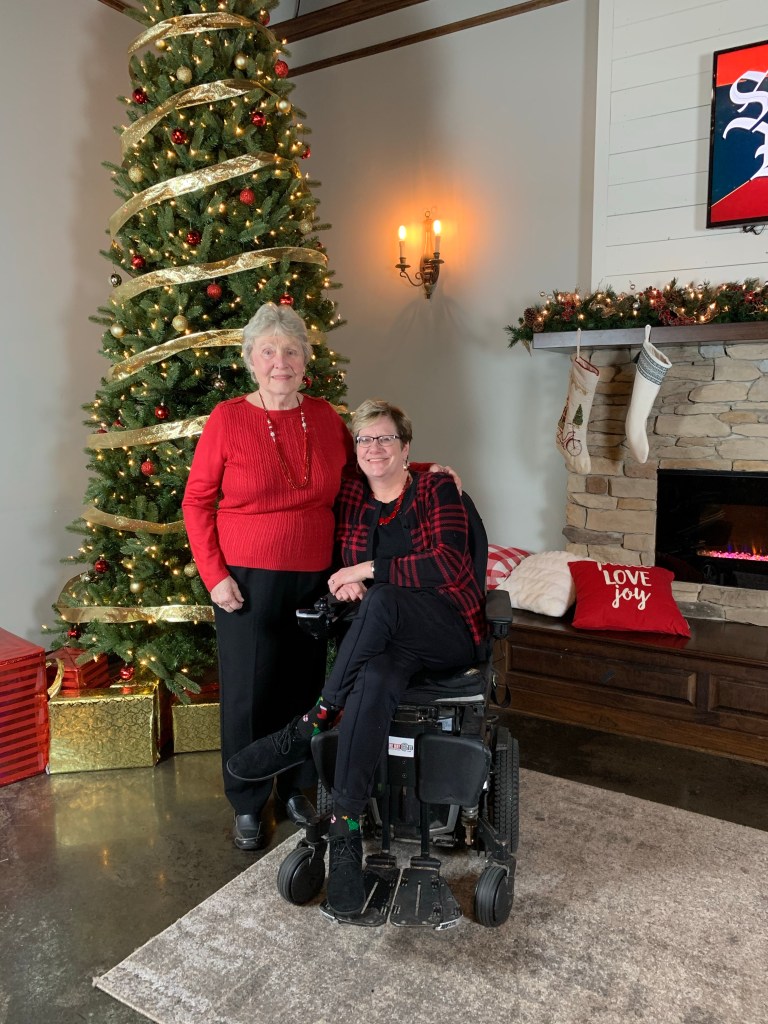
As many of you know, I’ve been paralyzed for 33 years. If it were only about sitting in a wheelchair, it might be easier. But it comes with daily battles – it’s muscle spasms, bathroom challenges, fatigue, sleepless nights, and an aching upper body from doing twice the work.
I try to stay strong and independent, but there are still hard days. In those moments, I cannot rely on my strength but I have to lean completely on God’s strength. Who am I kidding? I need to rely on His strength every moment, even when I think I’m strong. It’s all Him working through my weakness.
I believe God is in the midst of it all, using even the hardest parts of my story for good. And while I don’t always see the good right away, I can always find it in little glimpses or when I look back to see how things all worked together in a God way!
Monday night (it’s now Wednesday), I got up around midnight with a pounding headache and an intense thirst. As I drank some water, I noticed something strange – my mouth felt “off.” I couldn’t quite explain it, but it didn’t feel right. I shrugged it off and went back to bed, without giving it another thought.
But the moment I woke up, I knew something was wrong. I wheeled straight into Steve’s home office, already in tears, telling him something had happened. The second he looked at me, he saw it too. I could see concern in his face. I rushed to the mirror and that’s when I freaked out. The entire right side of my face was drooping. I instantly knew I was dealing with facial paralysis. But was it a stroke? Or could it possibly be Bell’s Palsy? I thought of that because I had known a few people who had it.
Bell’s palsy is a condition that causes temporary weakness or paralysis of the facial muscles, typically on one side of the face, usually caused by a virus. Stress can be a contributor as well. Not that I have any stress in my life.
Steve had briefly seen it when I smiled the night before but didn’t want to say “Hey, your face looks weird.” Probably not a good conversation starter for a husband’s well being, huh? He also didn’t think much about it as I often make silly faces at him, but he did notice one side of my smile was droopy.
I called my doctor immediately, and she told me to get to the ER right away to figure out what was going on. Everything was happening so fast, and my mind was racing with possibilities. Was it a stroke? Something worse? I was scared, unsure, and desperate for answers. When you end up paralyzed from giving birth, you get a little over anxious when something strange is happening in your body.
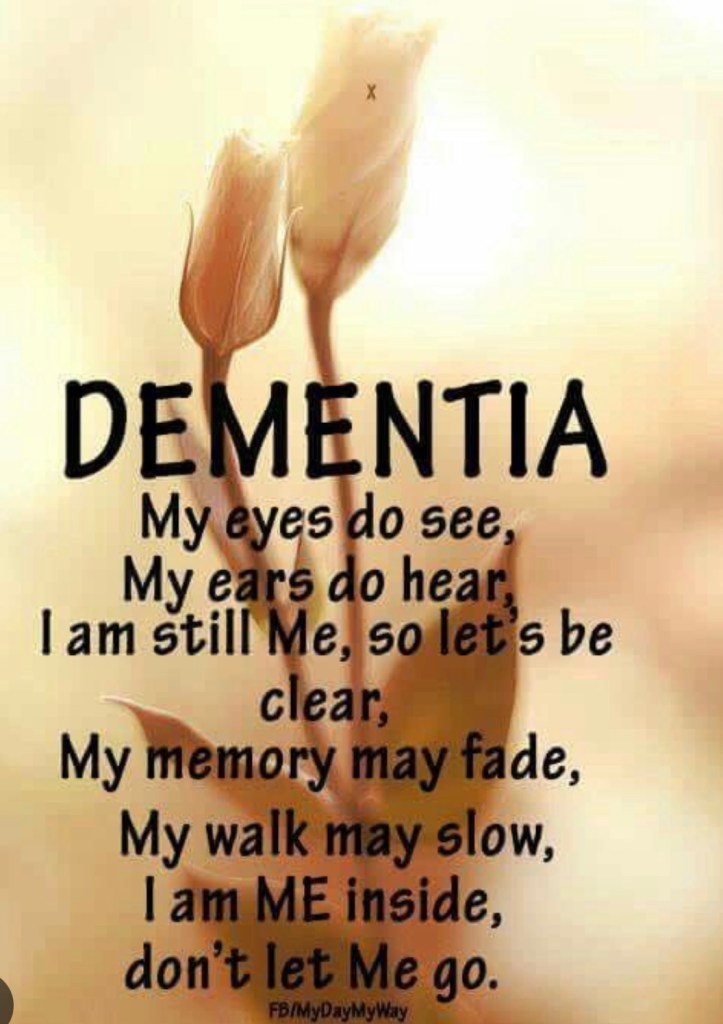
For some reason, I couldn’t stop crying. The fear, the uncertainty – it all just bubbled over. On top of it all, life wasn’t stopping. My three grandsons were at the house, I was supposed to pick up my granddaughter from school, and my mom, who has Parkinson’s and dementia and lives with Steve and I, was having a rough morning and needed a lot of extra help which I didn’t feel capable of in my current situation.
The weight of everything hit me at once. I felt completely overwhelmed. The anxiety was intense, and I didn’t know how I was going to manage it all, especially not knowing what was happening to my own body.
Thankfully, my daughter jumped in and took over everything. Without hesitation, she cared for my mom, called my granddaughter’s mom at work to offer to pick her up, reached out to her aunt for extra help with Mom, packed everyone up, and took them all to her house. She even made a meal for us and did my mom’s laundry.
In the middle of my fear and chaos, she became the calm. Her presence, her quick thinking, and her love steadied me in a moment when I felt like everything was unraveling.
I was beyond grateful, and honestly, deeply moved by her support. Watching her step in with such calm strength filled me with pride. She carried so much responsibility on her shoulders that morning and somehow stayed steady and composed through it all.
In a moment when I felt completely undone, she held things together. It was one of those moments where you realize your child has become an anchor, a gift straight from God when you need it most.
I have such a wonderful husband who stopped his day at work to take care of me, including just holding me while I cried. Plus I have adult children and grandchildren who just care about me and love me. I am blessed by each of them and their texts and calls and offers of help and prayers.
As I was getting dressed to leave for the ER, my phone rang. It was a friend of mine, Robin, who’s also paralyzed and she had experienced Bell’s palsy, not once but twice. The timing felt like more than coincidence. It felt like God.
I answered the call and talked to her as I got ready to go, despite my slurry voice. Her calm voice and firsthand knowledge were a gift. She shared what she went through, what helped, and what to expect. In the middle of my fear, her words brought comfort, clarity, and just enough peace to get me out the door.
Once we arrived at the ER, things moved quickly. Because I was signed in as a possible stroke or brain injury, they wasted no time. I was sent for a CT scan, had blood drawn, and endured 4 or 5 attempts to get an IV in.
Even after all the surgeries I’ve had over the years, I still hate IVs. And this one required a larger needle, just in case they needed to run tests with contrast dye. It felt like insult added to injury, but I kept reminding myself: answers were coming. I just had to get through it.
The worst part of the day was the MRI. I hadn’t had one since before my paralysis (surprisingly), and I was terrified. I thought there were small metal bolts in my spine from my surgery all those years ago, and I couldn’t shake the fear that I’d get sucked into the machine like a magnetized cartoon character. Thankfully, that didn’t happen. Phew.
But then came the real challenge. As soon as the noises started, my muscle spasms went wild. My legs jerked so violently they were hitting the sides of the machine. My back and head throbbed with pain, and through it all, I was supposed to keep my head completely still. I was tense and panicked, trying so hard to hold my body steady even as it fought against me.
I prayed nonstop through those 15 to 20 minutes. I begged God to be with me, to stop the spasms, to just help me get through it. I wanted so badly to hit the “stop” and “help” button but I didn’t. God answered my prayer, not by taking away the pain or calming the spasms, but by giving me the strength to endure it.
It was uncomfortable. It was painful. It was anxiety-inducing. But I made it through.
The MRI and CT scan both came back clear so no signs of a stroke or any brain bleeds. What a relief. Based on my symptoms all pointed clearly to Bell’s Palsy.
But even with a diagnosis, the reality was hard. I can’t eat or drink properly because one side of my mouth just wouldn’t cooperate. I’m drooling like a teething baby. My vision is very blurry and one eye will not close. My speech is slurred and it’s hard to talk for long. I have a terrible headache and my smile makes me look like The Joker (Steve’s observation).
The doctor explained I’d need several medications, including prednisone, and that recovery could take anywhere from one week to several months.
I’ve known two friends who never fully recovered from it, and Robin who had it twice was affected on opposite sides of her face each time. That knowledge sat heavy in my mind. I want to hope for a quick and full recovery, but I also knew I need to prepare my heart to walk through this, however long it takes.
I have to take a moment to honor my sister-in-law, Jen. She picked up my mom from my daughter’s house, brought her home, got her ready for bed, and then spent the night and next day caring for her so I could rest and recover. Jen is both friend and family, and one of the greatest gifts in my life. She always steps in without hesitation, no matter the situation. We’ve walked, and wheeled, through so much life together, and I treasure her. Her steady presence and servant’s heart are living proof of God’s love in action. Plus she can just make me laugh.
But both Morgan and Jen stepping in to take things off my overflowing plate gave me the peace and calm I needed. I knew that they could handle things with my mom so I could take time to think of my own needs.
This certainly wasn’t the week I planned. I didn’t expect to wake up with half my face paralyzed, to face new physical struggles, or to be reminded once again of how quickly life can shift. But through every test, every tear, and every tense moment, I was never alone.
God didn’t stop the discomfort, but He stayed with me in it.
He didn’t calm the spasms, but He gave me strength to endure them.
He didn’t remove the fear, but He whispered peace to my anxious heart.
I’m learning, yet again, that trusting God doesn’t mean everything will go smoothly. It means believing He is good, even when things are hard. It means clinging to His promises, like “When you pass through the waters, I will be with you… the rivers will not sweep over you” (Isaiah 43:2).
I don’t know how long this Bell’s palsy will last. I don’t know if my face will fully recover. But I do know this… God is faithful. He is with me. And even here, even now, I can trust Him.
And honestly, at first I didn’t laugh but I can now as I think half my body’s been paralyzed for 33 years yet apparently God thought, “Let’s give her a little more. She’s handling it so well.” Not funny exactly, but sometimes you’ve just got to find a little humor in the hard. It’s how I cope. It’s how I hold on. And it’s one more reminder that even when life gets weird, God is still good. And He designed me with the ability to laugh.
PS My facial recognition on my iPhone wouldn’t work today which really made me laugh.
PSS I won’t share a photo because I look stranger than normal. 🫤